

Most "best Amazon PPC software" lists just rank features. The real question: how much of the bid work does the tool do, and do you stay in control?
Search "best Amazon PPC software" and you get two kinds of pages. Vendor landing pages telling you their tool is the answer. And roundups that list ten to twenty-five tools with a feature-checkbox grid. Neither helps you decide, because they answer the wrong question.
The question is not "which tool has the most features." At $50k+ a month in ad spend, every serious set of Amazon PPC tools has bid rules, dayparting, a search-term view, and a dashboard. Whether you call it Amazon advertising software, a PPC tool, or an ad automation platform, feature parity is table stakes. The real question is: how much of the actual work does this software take off my plate, and how much control do I keep when it does?
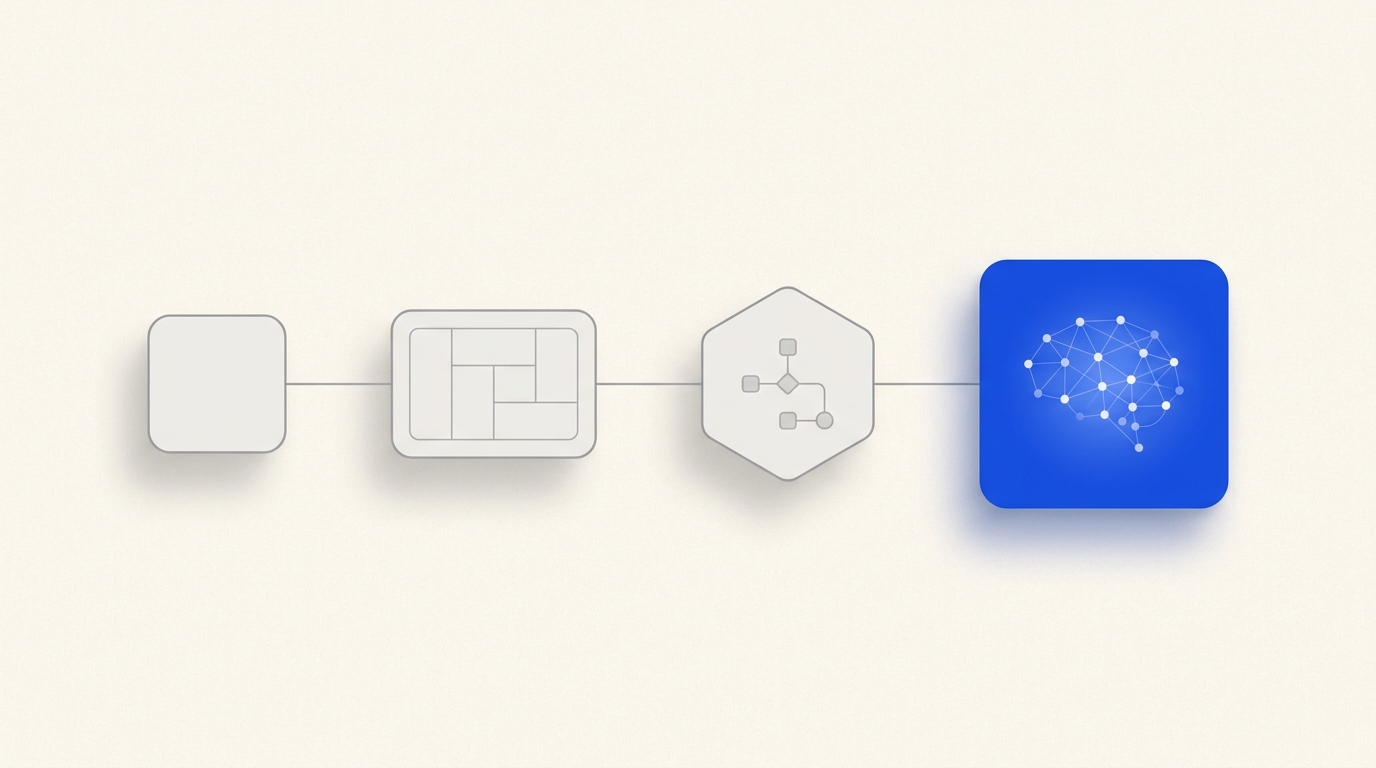
Sort the market by that, and Amazon PPC software splits into four categories. Each one automates a different amount of the work. Each one leaves you holding a different amount of the steering wheel. Once you know which category you want, the shortlist inside it is short.
| Category | What it automates | Who keeps control | Who it fits | Examples |
|---|---|---|---|---|
| Keyword & bid tools | Research and visibility; faster manual changes | You decide every move | Operators with time who want better data | Helium 10 Adtomic, suite ad modules |
| Rule-based automation | Runs the rules you write, on a schedule | You own and maintain the rules | Stable catalogs, patience for rule upkeep | Sellozo, Scale Insights |
| Full-service / managed | Goal-seeking optimization, often managed | You set goals; the model decides | Large accounts with budget, less need for transparency | Perpetua, Pacvue, Quartile |
| Autonomous AI agents | Monitors 24/7, reasons in context, proposes actions | You approve every change before it runs | Scaling without adding an analyst, want control | Clair |
Why feature-checklist lists fail you
A feature grid makes every tool look similar, because at the feature level they are. They all let you set a target ACoS. They all show you a search-term report. They all change bids in bulk. Tick, tick, tick.
What the grid hides is the thing you actually feel day to day: where your hours go. Two tools can both "manage bids" while one means *you* sit down every morning and approve a list, and the other means the work simply happened overnight. That difference does not show up as a checkbox. It is the whole decision.
So before comparing names, decide how much of the loop you want to own: finding the problem, deciding the fix, and executing it. That is what separates the four categories.
The four categories of Amazon PPC software
1. Keyword and bid tools. These are the Amazon PPC tools most sellers start with. They help you research keywords, read your search-term reports more clearly, and change bids in bulk. They surface the data and make manual changes faster. They do not decide for you. You still open the tool, read the numbers, and pull the levers. Helium 10's Adtomic and the advertising modules inside most all-in-one seller suites sit here. Good if you want better visibility and faster manual execution, and you have the time to run it.
2. Rule-based automation. You write the rules ("if ACoS is over 40% for 14 days, lower the bid 10%"; "if a search term has two orders at sub-30% ACoS, harvest it"), and the software runs them on a schedule. Tools like Sellozo and Scale Insights live here. This is a real step up: the work happens without you in the chair. The catch is that you are now maintaining a rule engine. Rules are brittle. They do not understand context. A rule written for a mature SKU will strangle a launch. A rule cannot tell a seasonal dip from a real problem. You trade execution time for rule-maintenance time.
3. Full-service and managed platforms. Tools like Perpetua, Pacvue, and Quartile add a layer of algorithmic optimization. You set goals (target ACoS, growth versus efficiency), and the platform moves bids toward them with its own models. Some bundle managed service or an agency on top. This automates more and asks less of you day to day. The trade-offs: cost climbs, since these are enterprise-priced; the optimization is often a black box; and "managed" can mean your account waits in a queue behind dozens of others. You get scale, you give up some transparency and immediacy.
4. Autonomous AI agents. The newest category. Instead of running fixed rules or a goal-seeking algorithm, an agent monitors your account continuously, reasons about what it sees in context, and proposes specific actions with the reasoning attached, then waits for your approval before anything touches Amazon. This is where Clair sits. The difference from a rule engine is that an agent reads the situation, not just a threshold: it can tell a launch from a mature SKU, flag a CPC spike as an anomaly worth a look rather than blindly cutting the bid, and explain why it wants to act. The difference from a black-box platform is that you see the reasoning and approve each move.
How to choose
Match the category to your real constraint, not to a feature list.
- You have time and want full control. Keyword and bid tools. You will do the work, but you will do it faster and with better data.
- You have predictable SKUs and patience for rule upkeep. Rule-based automation. Works well when your catalog is stable and your rules rarely need rewriting.
- You have budget and want hands-off scale. Full-service platforms. Best for large accounts that can absorb the cost and live with less transparency.
- You want the work done but refuse to give up control. Autonomous agents. Best when you are scaling, do not want to add an analyst, and still want to approve every change.
A useful tell: look at where your hours actually go. If you are spending them *finding* problems, such as scanning search-term reports, hunting CPC spikes, and checking which campaigns drifted overnight, then a tool that only speeds up *execution* will not help much. That is monitoring work, and only the last two categories touch it.
What to test in a free trial
Feature pages lie by omission. A trial does not. When you put any Amazon PPC software on trial, run it against four questions:
- How long until it surfaces something I did not already know? Good software earns its keep by catching what you would have missed, not by re-showing what you already see in Seller Central.
- When it suggests a change, can I see why? If you cannot inspect the reasoning, you cannot trust it at scale. You are just hoping.
- What happens to a launch SKU? Point it at a new product with thin data. Watch whether it over-negates or strangles the bid. This is where rule engines break.
- How much of my week does it actually remove? Time the before and after. If your hours barely move, the category is wrong for you, regardless of the brand on the box.
Where Clair fits
Clair is an autonomous AI workforce for Amazon sellers. For PPC, that means a specialist agent watches your campaigns around the clock, catches anomalies like CPC spikes and conversion drops, and proposes concrete changes (new negatives, bid moves, harvested keywords) with the reasoning shown. Nothing executes on Amazon without your approval. You stay in control of every action. You just stop doing the manual hunting.
That is the honest position. Clair is not a cheaper Helium 10, and it is not a replacement for every tool in your stack. If your only need is keyword research, buy a keyword tool. If you want the bid and monitoring work done continuously, in context, without handing over the keys, that is the agent category, and it is the one Clair is built for.
If you want to see how the four categories play out in practice, two companion reads help: Amazon PPC management is not a weekly task anymore, on why the cadence changed, and how to analyze an Amazon search term report, on the monitoring work that eats your week.
The short version
Stop comparing Amazon PPC software by feature count. Decide how much of the work you want the software to do, and how much control you need to keep. That single decision picks your category. Then the best tool inside it is an easy call.
Frequently asked questions
Start with your own account
The category you pick matters more than the brand you pick inside it. So be honest about where your week actually goes. If it goes into running campaigns by hand, a faster bid tool is enough. If it goes into hunting for the problems in the first place, you want software that does the watching and thinking, and leaves the final call to you.
That last category is new, and the easiest way to judge it is to see it run on your real campaigns rather than read another feature page. Watch where it would have caught wasted spend, what changes it would propose, and how the approval step feels when the decision is still yours.
Sign up to use Clair's autonomous agents to monitor PPC, propose actions, and keep you in control.